The rise of electric mobility in India has sparked conversations everywhere – from tea stalls to tech forums. Yet, along with growth, several Electric two-wheeler myths continue to circulate. These Electric scooter myths, Common myths about EV bikes, and broader Electric two-wheeler misconceptions often prevent riders from experiencing the true benefits of electric mobility.
At CAL-ON EV, we interact daily with customers who ask: Are electric two-wheelers really unreliable? We hear countless Common misconceptions about electric scooters rooted in outdated information. Through this blog, we are debunking electric scooter myths with clarity, real-world data, and practical experience from the Indian market.
India’s EV two-wheeler segment crossed over 8–9 lakh unit sales annually in recent years, contributing significantly to overall EV adoption. With rising fuel prices and government incentives, the Truth about electric two-wheelers in India is far more positive than many assume.
Let’s break down the Electric vehicle myths, compare EV bike facts vs myths, clear up EV battery life myths, and highlight the real Two-wheeler electric vehicle benefits that are transforming daily commuting.
Electric Two-Wheeler Myths That Still Hold Riders Back
Despite rapid innovation, Electric two-wheeler myths continue to dominate conversations. These Electric two-wheeler misconceptions often stem from early-generation models that lacked range and infrastructure. Today’s reality is very different.
Below, we systematically address Electric scooter myths, Common myths about EV bikes, and several Common misconceptions about electric scooters that need immediate correction.
1. Electric Two-Wheeler Myths: “Electric Scooters Don’t Have Enough Range.”
One of the most widespread Electric scooter myths is that electric scooters cannot travel long distances.
The Reality – EV Bike Facts vs Myths
Modern EV scooters in India now offer real-world ranges between 80 km and 150 km per charge, depending on battery capacity and riding conditions. At CAL-ON EV, our scooters are engineered to meet the daily commuting needs of Indian riders.
When comparing EV bike facts vs myths, data shows:
- Average Indian daily commute: 25–35 km
- Modern electric scooter range: 100+ km
- Charging cost per km: significantly lower than petrol
The Truth about electric two-wheelers in India is that range anxiety is largely psychological today.
These Common misconceptions about electric scooters ignore advancements in battery technology. As part of our commitment at CAL-ON EV, we constantly educate customers while debunking electric scooter myths about range limitations.
2. Electric Two-Wheeler Myths: “EV Batteries Die Too Quickly.”
Another persistent category of EV battery life myths suggests that batteries need frequent replacement and are extremely expensive.
EV Battery Life Myths vs EV Scooter Facts
Modern lithium-ion batteries are designed to last 4–7 years, depending on usage patterns. With proper charging habits:
- 1,000–1,500 charge cycles are achievable.
- Battery degradation is gradual, not sudden.
- Warranty coverage often ranges between 3 and 5 years.
These EV battery life myths often arise from confusion between old lead-acid systems and modern lithium-ion systems.
By Debunking electric scooter myths around battery health, we emphasize:
- Avoid deep discharge.
- Use certified chargers.
- Maintain recommended charging cycles.
When comparing EV bike facts vs myths, the lifecycle cost often favors electric over petrol.
At CAL-ON EV, we reassure buyers concerned about Electric vehicle myths that battery longevity today is a technological strength, not a weakness.
3. Electric Two-Wheeler Misconceptions: “EVs Are Too Expensive.”
Many believe that electric scooters cost more than petrol bikes.
Truth About Electric Two-Wheelers in India – Cost Analysis
Let’s compare:
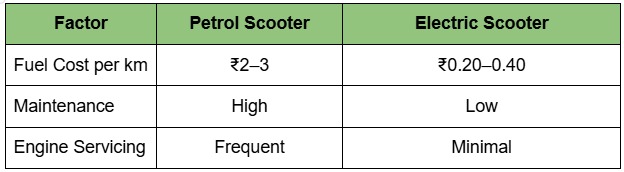
Though upfront cost may appear slightly higher, the Two-wheeler electric vehicle benefits include:
- Lower running cost
- Fewer moving parts
- Reduced servicing needs
These Common myths about EV bikes overlook long-term savings.
Additionally, government subsidies and state-level incentives are accelerating adoption. The growing demand has also expanded the EV Scooter Dealership in India network, making electric mobility more accessible.
The Truth about electric two-wheelers in India is that the total cost of ownership favors EVs within 2–3 years of usage.
4. Are Electric Two-Wheelers Really Unreliable?
A frequently asked question: Are electric two-wheelers really unreliable?
This concern stems from early-stage market entrants who lacked service infrastructure.
Debunking Electric Scooter Myths About Reliability
Today’s electric scooters:
- Use IP-rated battery enclosures.
- Have fewer mechanical parts than petrol engines.
- Experience lower vibration-related wear and tear.
When evaluating EV bike facts vs myths, reliability often improves due to simpler powertrains.
At CAL-ON EV, we ensure:
- Rigorous quality testing
- Reliable dealership support
- Efficient after-sales service
The expansion of EV Scooter Dealership in India ensures accessibility and trust. Thus, the idea that electric scooters frequently break down is among the biggest Electric two-wheeler misconceptions.
5. Electric Scooter Myths: “Charging Infrastructure Is Insufficient.”
Another major category of Electric vehicle myths involves charging accessibility.
Truth About Electric Two-Wheelers in India – Charging Evolution
India is witnessing rapid growth in public charging stations across urban centers. Additionally:
- 80% of EV charging happens at home.
- Standard household sockets are sufficient.
- Fast-charging options are expanding.
When we discuss Debunking electric scooter myths, we emphasize that electric two-wheelers primarily depend on home charging – unlike EV cars.
These Common misconceptions about electric scooters assume public charging is mandatory, which is not the case.
6. Electric Two-Wheeler Myths: “Performance Is Weak.”
Many riders believe EV scooters lack pickup or speed.
EV Bike Facts vs Myths – Performance Breakdown
Electric motors provide:
- Instant torque
- Smooth acceleration
- Silent operation
In fact, electric scooters often outperform petrol scooters in city traffic.
These Common myths about EV bikes ignore the torque advantage of electric motors.
By Debunking electric scooter myths, we show that electric vehicles offer responsive acceleration ideal for Indian road conditions.
7. EV Battery Life Myths: “Battery Replacement Is a Financial Burden.”
While EV battery life myths exaggerate replacement costs, battery prices have steadily decreased over the past decade.
The Truth about electric two-wheelers in India includes:
- Falling lithium-ion prices.
- Improved recycling programs.
- Second-life battery applications.
When evaluating Electric vehicle myths, battery cost panic is often outdated.
8. Common Misconceptions About Electric Scooters and Safety
Some fear that electric scooters are unsafe in the rain or prone to fire.
Debunking Electric Scooter Myths – Safety Measures
Modern EVs include:
- Thermal management systems
- Battery Management Systems (BMS)
- Waterproofing standards
The majority of safety incidents historically occurred due to poor-quality manufacturing, not inherent EV flaws.
Thus, Electric two-wheeler misconceptions regarding safety are increasingly being corrected by stricter regulations.
9. EV Scooter Dealership in India – Accessibility Is Growing
The rise of EV scooter dealership networks in India has significantly reduced service-related concerns.
At CAL-ON EV:
- We are expanding dealership presence.
- We provide genuine spare parts.
- We train service technicians extensively.
This expansion directly addresses Common myths about EV bikes related to service unavailability.
10. Two-Wheeler Electric Vehicle Benefits That Myths Ignore
While discussing Electric two-wheeler myths, people often forget the advantages:
Two-Wheeler Electric Vehicle Benefits Include:
- Zero tailpipe emissions
- Low operating cost
- Minimal noise pollution
- Reduced maintenance
The Truth about electric two-wheelers in India is that urban commuting is becoming more sustainable and cost-effective.
When comparing EV bike facts vs myths, benefits clearly outweigh concerns.
Conclusion: A Message from CAL-ON EV
At CAL-ON EV, we firmly believe that progress begins with awareness. For too long, Electric two-wheeler myths, Electric scooter myths, and various Electric two-wheeler misconceptions have slowed adoption. By Debunking electric scooter myths, presenting EV bike facts vs myths, and clarifying EV battery life myths, we aim to empower Indian riders with truth – not fear.
The Truth about electric two-wheelers in India is simple: electric mobility is no longer the future – it is the present. With growing EV scooter dealership networks in India, improved battery technology, and undeniable benefits for two-wheeler electric vehicles, the shift is irreversible.
If you still wonder, are electric two-wheelers really unreliable? – We invite you to experience the change yourself. Visit us at www.calonev.com and be part of the movement redefining urban transportation.
The myths are fading. The facts are accelerating. And at CAL-ON EV, we are proud to ride ahead.
>>Also Read: Are Electric Scooters the Secret to Stress-Free City Rides?
Frequently Asked Questions (FAQs)
1. Are electric two-wheelers really unreliable?
No. Modern EV scooters are highly reliable due to fewer mechanical parts and improved battery systems.
2. What is the truth about electric two-wheelers in India?
They are cost-efficient, environmentally friendly, and increasingly supported by expanding infrastructure.
3. How long do EV batteries last?
Most lithium-ion batteries last 4–7 years, depending on usage and maintenance.
4. Are EV battery life myths true?
No. Modern battery technology is far more durable than early versions.
5. What are the two-wheeler electric vehicle benefits?
Lower running cost, less maintenance, zero emissions, and smooth performance.
6. Is an EV scooter dealership in India easily available?
Yes. The dealership network is rapidly expanding, including CAL-ON EV outlets across regions.
Follow Us on Social Media! Stay Connected & Stay Ahead!