
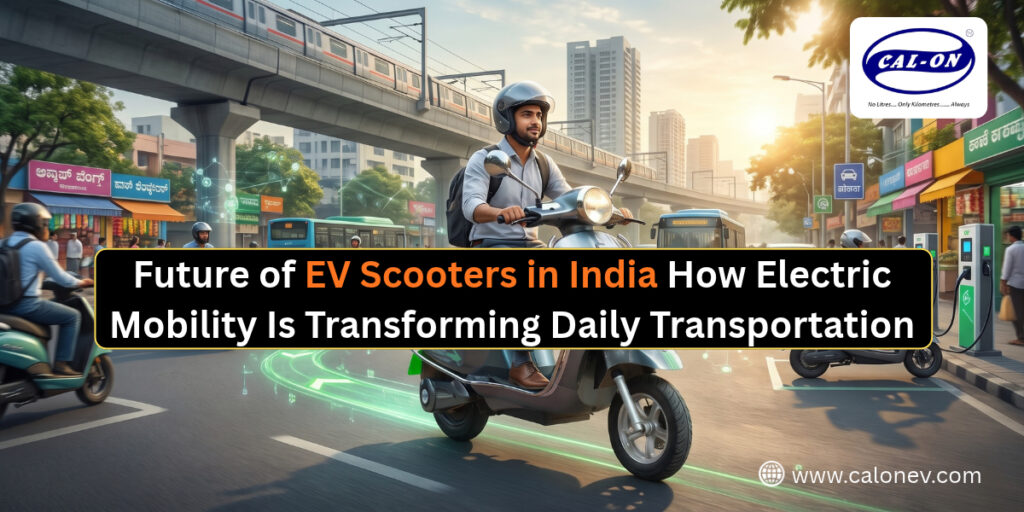
Think about your everyday commute. Rising petrol expenses, crowded roads, frequent traffic stops, and growing concerns about pollution have made many people rethink how they travel. Electric scooters are emerging as a practical alternative, offering a different way to handle daily transportation.
What once seemed like a new or unfamiliar technology is gradually becoming part of everyday life. Students, office commuters, delivery professionals, and business owners are exploring electric two-wheelers for their convenience and potential running-cost advantages.
The future of EV scooters in India looks promising as technology improves, more models enter the market, and charging infrastructure continues to develop. Electric mobility is no longer just about replacing petrol with electricity. It is about making transportation more efficient, accessible, and sustainable.
Future of EV Scooters in India: What Lies Ahead
The future of EV scooters in India looks promising as more people embrace electric mobility for affordable, convenient, and eco-friendly transportation. With advancements in battery technology, improved charging infrastructure, and growing awareness of sustainable travel, electric scooters are becoming a practical choice for everyday commuting and business needs. As the EV industry continues to evolve, electric scooters are expected to play an important role in transforming India’s transportation landscape.
Let’s explore the developments shaping this transformation and what they could mean for Indian riders.
1. The Growing Electric Scooter Market in India
India has a large two-wheeler user base, making electric scooters an important part of the country’s mobility transition. Their suitability for everyday commuting and short-distance travel has helped attract interest from individual buyers as well as commercial operators.
The electric scooter market in India is expanding as customers become more familiar with battery-powered vehicles and manufacturers introduce models for different budgets and requirements.
According to the NITI Aayog’s India Electric Mobility Index report, electric vehicles accounted for 7.7% of new vehicle sales in 2024, with two-wheelers representing 59% of EV sales. This indicates the important role electric two-wheelers play in India’s transition towards electric mobility.
The growth of electric scooters in India is being supported by several factors:
- Increasing awareness of electric transportation
- Interest in reducing petrol expenses
- Improvements in battery technology
- More vehicle choices across different price segments
- Growing demand for local delivery and utility vehicles
As the market develops, buyers are likely to pay greater attention to reliability, after-sales service, battery performance, and overall ownership costs.
2. Future of EV Scooters in India and Changing Customer Preferences
A few years ago, many buyers were hesitant about electric scooters because of concerns about battery life, limited range, charging facilities, and servicing.
Today, customers are becoming more informed. They compare specifications, research real-world range, evaluate warranty conditions, and consider the cost of charging before making a purchase.
The future of EV scooters in India will depend heavily on how well manufacturers address these everyday concerns.
Different customer groups are also finding different reasons to consider electric mobility:
Office commuters: People travelling regular city routes may appreciate the convenience of charging and the potential for lower running expenses.
Students: Electric scooters can offer a practical transportation option for suitable short-distance journeys.
Delivery professionals: Businesses can explore electric two-wheelers for repeated local deliveries and last-mile transportation.
Entrepreneurs: Commercial EV models may help businesses manage regular transportation requirements.
As these needs evolve, manufacturers will have to focus on practical features rather than relying only on attractive specifications.
3. Electric Two-Wheeler Adoption in India Is Expanding
Electric mobility is gradually moving beyond early adopters. More consumers are considering electric vehicles as part of their regular transportation choices.
The electric two-wheeler adoption in India is influenced by improved product availability, greater awareness, operating-cost considerations, and supportive government initiatives.
For many buyers, the decision is becoming less about trying a new technology and more about finding a vehicle that fits their daily routine.
The future of electric two-wheelers will also depend on making EV ownership convenient in smaller cities and towns, where charging access and service availability may differ from larger urban centres.
Manufacturers, dealerships, service providers, and charging companies all have a role to play in building customer confidence.
4. Government Policies for Electric Vehicles in India
Government support has contributed to the development of India’s electric mobility ecosystem. Incentives, manufacturing initiatives, and charging infrastructure programmes are intended to encourage adoption and strengthen domestic production.
One important initiative is the PM Electric Drive Revolution in Innovative Vehicle Enhancement (PM E-DRIVE) scheme, introduced to support electric vehicle adoption and the wider EV ecosystem.
The scheme includes support for eligible vehicle segments and charging infrastructure. Its provisions, timelines, and incentive eligibility can change, so buyers should check the latest official notifications before making a purchase decision.
The government policies for electric vehicles in India also reflect a broader focus on domestic manufacturing, battery development, and improved charging facilities.
For consumers, policy support can influence vehicle affordability. However, it is important to compare the actual purchase price, applicable incentives, warranty, and ownership costs rather than assuming every model qualifies for the same benefits.
5. Electric Scooter Technology Advancements Are Improving the Experience
Technology will play a major role in making electric scooters more practical and dependable. Manufacturers are working on improvements across batteries, motors, vehicle software, and connected features.
Some important electric scooter technology advancements include:
- Improvements in battery energy density and charging systems
- More efficient electric motors
- Battery management systems that monitor battery conditions
- Digital displays and connected vehicle features
- Improved diagnostics and electronic safety systems
- Better integration of vehicle control systems
Battery technology is particularly important because it influences range, charging time, vehicle weight, and purchase cost.
The EV scooter industry trends also point towards growing interest in smart features, improved vehicle performance, and products designed for specific uses such as commuting and commercial transportation.
Technology alone, however, is not enough. Buyers also need reliable servicing, accessible spare parts, and clear warranty support.
6. Benefits of Electric Mobility for Everyday Transportation
Electric scooters offer several potential advantages for people who travel regularly within cities and neighbourhoods.
The benefits of electric mobility include:
Potentially lower running expenses: Charging can cost less than petrol for comparable travel, depending on electricity tariffs and vehicle efficiency.
Fewer engine-related service requirements: Electric powertrains do not need conventional engine oil changes or spark plug replacements.
Convenient city travel: Compact electric two-wheelers can be useful for many short-distance journeys.
No tailpipe emissions: Battery-powered scooters produce no exhaust emissions while being ridden.
Quiet operation: Electric motors generally operate more quietly than petrol engines.
These advantages make electric scooters worth considering for everyday transportation. Actual savings and suitability depend on the model, riding distance, charging arrangements, and maintenance requirements.
7. Sustainable Transportation in India and the Role of EV Scooters
Transportation is an important part of India’s energy and environmental challenges. Moving towards cleaner mobility options can contribute to reducing dependence on petrol and diesel.
The shift towards sustainable transportation in India involves more than introducing electric vehicles. It also requires cleaner electricity, responsible battery manufacturing, battery recycling, charging infrastructure, and efficient public transportation.
Electric scooters can contribute to this transition, particularly when they replace petrol-powered journeys.
However, responsible EV adoption also means considering what happens to batteries at the end of their useful life. Battery collection, recycling, and safe disposal will become increasingly important as the number of electric vehicles grows.
A sustainable mobility ecosystem needs cooperation between manufacturers, policymakers, recycling companies, and consumers.
8. Charging Infrastructure Will Shape the Next Phase of Growth
Convenient charging is one of the most important factors influencing EV ownership. Buyers want to know where they can charge, how long charging takes, and whether facilities are available along their regular routes.
Home charging can be convenient for people with suitable parking and electrical connections. Public charging facilities can provide additional options for riders who travel longer distances or do not have access to private charging.
The EV scooter industry trends suggest that charging convenience will remain an important part of the customer experience.
Future development will need to focus on:
- More accessible public charging facilities
- Safe and reliable charging equipment
- Clear information about charger compatibility
- Better charging access in residential communities
- Improved support for commercial EV fleets
As infrastructure improves, electric scooters may become easier to use for people who currently hesitate because of charging concerns.
9. New Opportunities for Businesses and Delivery Services
Electric mobility is not limited to personal commuting. Businesses that depend on regular local transportation are also exploring electric two-wheelers.
Restaurants, grocery stores, courier services, pharmacies, and local retailers may find suitable applications for electric scooters.
For businesses, the decision depends on daily kilometres, carrying capacity, charging access, vehicle availability, and total operating expenses.
The future of electric two-wheelers may include more specialised models designed for delivery, goods transportation, and other commercial requirements.
CAL-ON EV offers electric mobility options for personal and utility-focused applications. Buyers and business owners can explore its models by comparing specifications, battery options, range, payload capacity, warranty terms, and service support.
The right vehicle should match the actual workload rather than simply having the highest advertised range.
10. What the Future Holds for Electric Scooters in India
The next stage of electric mobility will likely be shaped by improvements in affordability, battery performance, charging access, and customer experience.
The future of EV scooters in India will not depend on one breakthrough alone. It will require steady progress across the entire ecosystem.
Some developments worth watching include:
- More affordable electric two-wheeler models
- Better battery efficiency and durability
- Wider availability of charging facilities
- Growth in domestic battery and component manufacturing
- Improved after-sales service networks
- Greater adoption by commercial and delivery businesses
- Better battery collection and recycling systems
The future of electric mobility in India will also depend on how effectively manufacturers respond to different customer needs, from affordable daily commuters to utility-focused commercial vehicles.
For buyers, this means more choices and potentially better ownership experiences as the ecosystem matures.
Final Thoughts
Electric scooters are gradually changing how people think about everyday transportation. Better technology, growing consumer awareness, policy support, and new business applications are creating opportunities for electric mobility across India.
The transition will still require improvements in affordability, charging infrastructure, battery recycling, and after-sales service. But the direction is clear: electric two-wheelers are becoming an increasingly important part of India’s transportation conversation.
For individuals and businesses exploring this change, CAL-ON EV is one brand to consider while comparing available electric mobility options. Evaluate each model according to your travel needs, budget, charging access, and expected usage.
The future of EV scooters in India will ultimately be shaped by vehicles that deliver practical value, dependable performance, and a better every day riding experience.
Frequently Asked Questions
1. Are electric scooters becoming popular in India?
A: Yes. Electric scooters are gaining attention because of their potential running-cost advantages, expanding model choices, improved technology, and suitability for many daily commuting needs.
2. What is driving the growth of electric scooters in India?
A: Growing awareness, fuel-cost considerations, government initiatives, improvements in battery technology, and increasing interest from delivery businesses are among the factors supporting adoption.
3. Will electric scooters become more affordable in the future?
A: Battery technology, local manufacturing, production scale, and competition may help improve affordability over time. Actual prices will depend on the model, components, and market conditions.
4. Are electric scooters suitable for commercial use?
A: Yes. Certain models are designed for delivery and utility applications. Businesses should compare payload capacity, real-world range, charging time, warranty, and service support before purchasing.
5. What should I consider before buying an electric scooter?
A: Check battery capacity, expected real-world range, charging requirements, warranty, maintenance costs, service-centre availability, and whether the vehicle suits your daily travel needs.