
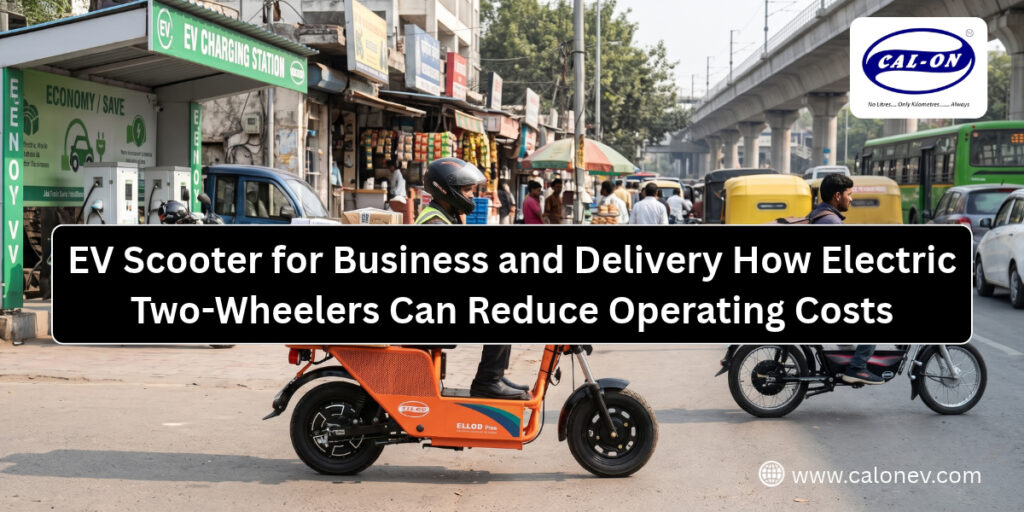
Running a delivery business or managing daily business operations comes with several expenses. Fuel, vehicle maintenance, servicing, and regular repairs can take a considerable share of your monthly budget. For businesses that depend on two-wheelers to transport goods or complete deliveries, even a small increase in operating costs can affect profitability.
This is why many business owners are exploring electric mobility. Electric scooters offer an alternative to petrol-powered vehicles, particularly for short-distance travel, local deliveries, and regular business routes.
Choosing an EV scooter for business and delivery can help businesses manage day-to-day transportation expenses while supporting a more sustainable way of working. From grocery deliveries and courier services to small businesses and local distribution, electric two-wheelers can make everyday operations more practical.
Let’s explore how electric scooters can reduce operating expenses, improve delivery efficiency, and support business growth.
Why Choose an EV Scooter for Business and Delivery?
For businesses that make frequent local trips, transportation is an important part of daily operations. Petrol expenses can add up quickly when vehicles cover several kilometres every day.
Electric scooters use rechargeable batteries instead of petrol, helping businesses reduce their dependence on conventional fuel. They also have fewer engine-related components, which can simplify certain maintenance requirements.
An electric scooter for business use can be useful for:
- Grocery and food delivery services
- Courier and parcel transportation
- Local shops and retail businesses
- Pharmacy and document deliveries
- Small-scale distribution operations
- Entrepreneurs starting a delivery-based business
The right vehicle depends on daily distance, load requirements, charging access, and the type of goods being transported. Businesses should compare these factors before making a purchase.
1. Reduce Daily Fuel Expenses
Fuel is one of the recurring costs for businesses that rely on petrol-powered two-wheelers. When a delivery rider travels throughout the day, fuel expenses can become a significant monthly commitment.
Electric scooters replace petrol refuelling with battery charging. Depending on electricity tariffs, vehicle efficiency, and usage, charging can cost less than running a comparable petrol vehicle.
This creates an opportunity for EV operating cost savings, especially for businesses with predictable local routes and frequent daily trips.
Consider a business that completes multiple deliveries within the same neighbourhood. Instead of making repeated petrol stops, riders can start their shifts with adequately charged vehicles and recharge according to their operating schedules.
However, actual savings depend on electricity prices, charging arrangements, battery performance, and the distance covered. Business owners should calculate costs using their own daily travel patterns rather than relying only on general estimates.
2. Lower Certain Maintenance Expenses
Maintenance is another important part of business transportation costs. Petrol vehicles require engine-related servicing, including oil changes and other components that electric vehicles do not use.
Electric scooters have fewer moving parts in their powertrain, which can reduce some routine maintenance requirements. However, they still need inspections and occasional replacements.
The electric scooter maintenance cost will depend on the vehicle model, riding conditions, distance travelled, and component quality.
Common maintenance requirements include:
- Tyre inspection and replacement
- Brake checks and servicing
- Battery and charging-system inspections
- Electrical connection checks
- Suspension and general mechanical maintenance
For business owners, regular servicing helps keep vehicles available for daily operations. A well-maintained scooter can also reduce unexpected interruptions that affect delivery schedules.
3. Improve Last-Mile Delivery Operations
Last-mile delivery is the final stage of transporting products from a business or distribution point to customers. It often involves short distances, frequent stops, and navigating busy streets.
Electric scooters can be useful for these operations because they are suitable for many local travel requirements. Their compact size can make neighbourhood navigation and parking more convenient than using larger vehicles.
An electric two-wheeler for delivery can support businesses such as restaurants, grocery stores, pharmacies, and courier services.
For example, a local grocery shop may use electric scooters to deliver everyday essentials within a defined service area. A courier company may use them for document and small-parcel transportation.
The key is to select a vehicle with sufficient range, suitable carrying capacity, and charging arrangements that match the delivery schedule.
4. Choose a Vehicle Designed for Commercial Requirements
Not every electric scooter is designed for heavy daily usage. A personal commuter model may not be suitable for businesses that regularly transport goods or carry additional loads.
A commercial electric scooter should be evaluated based on its intended application and operating conditions.
Before purchasing, check:
- Maximum permitted payload
- Battery capacity and expected range
- Charging time
- Motor performance
- Tyre and braking specifications
- Warranty and service availability
A business that transports lightweight parcels may have different requirements from one delivering groceries or other heavier goods.
Choosing the right electric two-wheeler for commercial use can help businesses avoid buying a vehicle that does not match their daily workload.
Always follow the manufacturer’s load limits and operating recommendations.
5. Support More Efficient Delivery Business Models
Delivery businesses often need vehicles that can operate across several trips throughout the day. Choosing a suitable electric scooter can help create a more organised transportation system.
An electric scooter for delivery business can be assigned to a specific route, delivery area, or rider. This makes it easier to estimate charging requirements, track distance, and plan daily schedules.
For example, a business operating within a limited delivery radius can:
- Identify its most frequently travelled routes.
- Estimate the kilometres covered per shift.
- Select scooters with suitable real-world range.
- Schedule charging during breaks or between shifts.
- Monitor maintenance and operating expenses.
This approach helps business owners understand how their vehicles are being used and where cost improvements may be possible.
6. Make Local Deliveries More Practical
Businesses that operate within cities and neighbourhoods often need vehicles that can handle frequent short trips.
An electric scooter for last-mile delivery can be a practical option for businesses transporting smaller goods over planned local routes. Its compact form can make it easier to move through certain congested areas and park near customer locations.
However, range and payload requirements should always be considered together. A scooter that offers sufficient range for a light commuter may not provide the same performance when carrying a heavier load.
Businesses should evaluate the actual delivery route, number of trips, charging opportunities, and maximum permitted payload before selecting a model.
7. Understand the Benefits of Electric Scooters for Businesses
Switching to electric mobility is not only about reducing fuel expenses. It can also influence how a business plans its transportation and manages its daily operations.
Some of the benefits of electric scooters for businesses include:
Potentially lower energy expenses: Charging may cost less than petrol for comparable usage, depending on local tariffs and vehicle efficiency.
Fewer engine-related maintenance requirements: Electric powertrains do not require several conventional engine services.
Convenient local transportation: Compact electric two-wheelers can suit many short-distance business routes.
Reduced tailpipe emissions: Battery-powered scooters produce no tailpipe emissions while being ridden.
Better expense planning: Businesses with predictable routes can estimate charging requirements and plan vehicle usage more effectively.
These advantages can make electric scooters worth considering for entrepreneurs, retailers, and delivery operators.
8. Calculate the Total Cost Before Purchasing
A lower purchase price does not always mean a vehicle is more economical over time. Business owners should compare the total cost of ownership before investing in a fleet.
A practical comparison should include:
| Cost category | What to evaluate |
| Purchase price | Initial vehicle investment |
| Charging | Electricity tariff and energy consumption |
| Maintenance | Scheduled inspections and replacement parts |
| Battery | Warranty, expected lifespan, and replacement terms |
| Insurance | Applicable insurance expenses |
| Downtime | Potential loss of business during repairs |
| Charging setup | Home, workplace, or commercial charging requirements |
A cost-effective electric scooter for delivery is one that meets the business’s daily requirements without creating unnecessary expenses.
For a meaningful comparison, estimate the cost per kilometre using your expected daily distance, electricity tariff, and vehicle efficiency. Then compare it with the fuel and maintenance expenses of your existing vehicles.
9. What to Check Before Buying an Electric Scooter for Business
Before purchasing an electric scooter, think about the actual work it will perform. A vehicle used for occasional local errands may not need the same specifications as one operating for several hours every day.
Use this checklist:
- Range: Is the expected real-world range sufficient for your daily routes?
- Payload: Can the vehicle safely carry your typical goods?
- Battery: Are the battery specifications and warranty suitable?
- Charging: Can the scooter be charged conveniently between shifts?
- Durability: Is it designed for your expected usage?
- Service: Is authorised maintenance support accessible?
- Cost: Does the total ownership cost fit your business budget?
For businesses considering an electric scooter for business use, it is also worth asking the dealer about commercial usage conditions and warranty coverage.
10. How CAL-ON EV Supports Electric Mobility for Businesses
Businesses looking to explore electric transportation need vehicles that match their operational requirements. CAL-ON EV offers electric mobility options for everyday transportation and utility-focused applications.
Its range includes models intended for personal mobility as well as commercial and goods-transport requirements. Depending on the model, buyers can compare specifications such as battery options, range, and payload capacity.
For entrepreneurs and delivery operators, the important step is to identify the right model for the intended workload. Review the vehicle specifications, charging requirements, warranty conditions, and service support before making a purchase.
Choosing an EV scooter for business and delivery should be a decision based on practical business needs, not just advertised range or initial price.
Also Read: EV Scooter Range Explained: Factors That Affect Distance per Charge – CAL ON EV
Final Thoughts
Managing transportation expenses is essential for any business that depends on regular deliveries. Fuel, maintenance, and vehicle downtime can all affect profitability, particularly when daily operations involve frequent local trips.
Electric scooters offer an alternative that may help businesses reduce energy expenses, simplify certain maintenance requirements, and organise last-mile delivery operations more efficiently.
The right vehicle depends on your delivery distance, payload, charging access, and budget. By comparing total ownership costs and choosing a model designed for your workload, you can make a more informed investment.
For businesses exploring electric mobility, CAL-ON EV is worth considering as part of the research process. Evaluate the available models and select one that supports your daily operations and future business plans.
Frequently Asked Questions
1. Are electric scooters suitable for delivery businesses?
A: Yes. Electric scooters can be suitable for local deliveries, courier services, grocery transportation, and other short-distance business operations, provided their range and payload meet the business requirements.
2. Can electric scooters reduce business operating costs?
A: They can help reduce petrol expenses and certain engine-related maintenance costs. Actual savings depend on electricity prices, vehicle efficiency, maintenance, battery costs, and daily kilometres travelled.
3. What should businesses check before buying a commercial electric scooter?
A: Businesses should evaluate battery capacity, real-world range, payload, charging time, durability, warranty, spare-part availability, and authorised service support.
4. Are electric scooters suitable for last-mile delivery?
A: Yes. Their compact design and suitability for many short-distance routes can make them useful for last-mile delivery. Businesses should ensure the vehicle can handle the required load and daily distance.
5. How can I calculate the cost savings of switching to an electric scooter?
A: Compare your current petrol and maintenance expenses with the estimated electricity, servicing, battery, and other ownership costs of the electric scooter. Use your actual daily distance and local energy prices for a realistic estimate.