
Imagine starting your morning commute with a fully charged electric scooter. You have a busy day ahead, a few errands to complete, and a return journey to make. Naturally, one question comes to mind: will the battery last until you reach home?
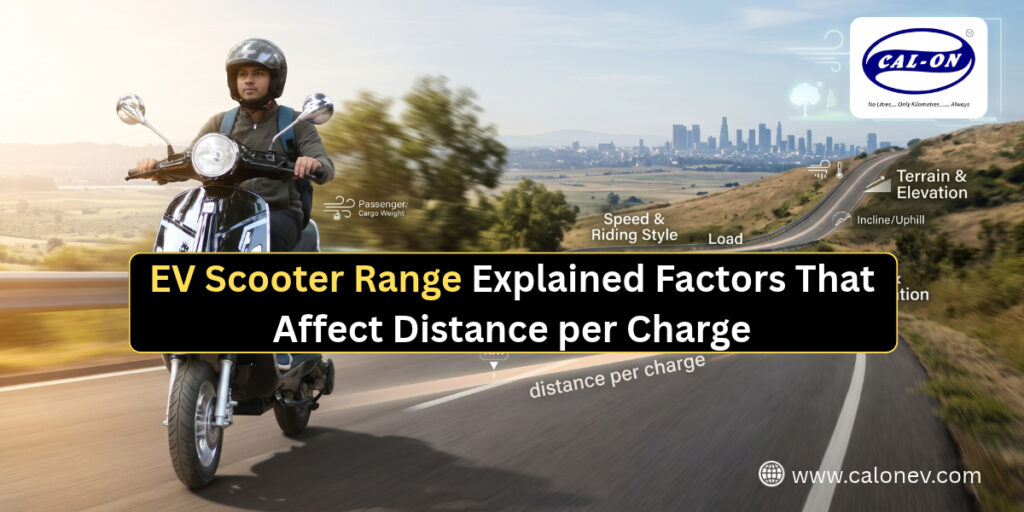
For many electric scooter owners, distance per charge is one of the most important considerations when choosing a vehicle. A scooter may offer an impressive advertised range, but everyday performance depends on several factors, including riding habits, road conditions, battery capacity, vehicle load, and weather.
Understanding EV scooter range helps you select a model that suits your daily travel and plan your journeys with confidence. Whether you use an electric scooter for office commuting, personal travel, or delivery work, knowing what affects battery consumption can help you get more out of every charge.
Let’s explore the key factors that influence range and the practical steps you can take to improve everyday efficiency.
What Does EV Scooter Range Mean?
An electric scooter’s range refers to the distance it can travel using the energy stored in its battery before it needs recharging. Manufacturers generally provide an estimated range based on specific testing conditions. However, actual results can vary depending on how and where you ride.
The electric scooter range per charge is particularly important for people who depend on their vehicles every day. Office commuters need enough battery capacity for their daily route, while delivery riders may require a longer operating distance with multiple stops.
It is also useful to understand the difference between claimed range and actual riding distance. A manufacturer’s figure is a reference point, not a guarantee that every rider will achieve the same result.
When comparing models, consider your typical daily distance and keep some additional range available for unexpected journeys.
1. Battery Capacity and EV Battery Performance
Battery capacity is one of the biggest contributors to how far an electric scooter can travel. It determines how much energy the battery can store and is commonly described using voltage and ampere-hours for two-wheelers.
In general, a battery with greater usable capacity can support longer travel when other conditions are similar. However, battery size alone does not determine the final distance.
Overall EV battery performance also depends on battery chemistry, motor efficiency, vehicle weight, battery management systems, and operating conditions.
Before choosing a scooter, check:
- Battery specifications and usable capacity
- Manufacturer-claimed range
- Charging time and recommended charging practices
- Battery warranty and service support
- Availability of replacement components
Choose a battery that matches your regular travel requirements rather than paying extra for capacity you may rarely use.
2. Riding Speed and Acceleration
Your riding style can make a noticeable difference to battery consumption. Frequent rapid acceleration and consistently high speeds generally require more energy than smooth, steady riding.
For example, accelerating aggressively at every traffic signal can consume more energy than gradually increasing speed. Sudden braking and repeated acceleration can also make city journeys less efficient.
These are important factors affecting EV scooter range, especially when riding through busy urban areas.
To make your rides more efficient:
- Accelerate gradually.
- Maintain a steady, safe speed where possible.
- Avoid unnecessary sudden braking.
- Use the riding mode suitable for your route.
- Follow traffic rules instead of trying to maximise range at the expense of safety.
A smoother riding style can help you use battery power more sensibly while making your journey more comfortable.
3. Road Conditions and Traffic
The type of roads you travel on also influences energy consumption. Smooth roads generally require less effort from the vehicle than uneven surfaces, steep inclines, or routes with frequent stops.
Traffic conditions matter, too. In city traffic, repeated acceleration and braking can affect battery usage. On hilly roads, the motor may need additional power to move the scooter uphill.
Your electric scooter driving range may therefore differ between a regular office commute and a weekend trip through unfamiliar roads.
When possible, plan routes that are safe and convenient, avoid unnecessary detours, and allow extra battery reserve for steep or congested stretches.
4. Weather and Temperature
Weather conditions can influence battery efficiency. Very high temperatures may affect battery operation and cooling requirements, while cold conditions can reduce available performance in some battery systems.
In India, electric scooters often operate in hot weather, heavy monsoon conditions, and varying road temperatures. Parking in direct sunlight for extended periods may expose the battery and other components to unnecessary heat.
To support consistent performance:
- Park in a shaded, suitable location whenever possible.
- Follow the manufacturer’s temperature recommendations.
- Keep charging equipment away from moisture.
- Avoid charging a battery that appears damaged or unusually hot.
- Seek professional assistance if you notice unusual battery behaviour.
These conditions can contribute to changes in electric scooter battery range, so do not assume every reduction in distance means the battery is faulty.
5. Vehicle Load and Carrying Capacity
The weight carried by an electric scooter can influence how much energy it uses. Carrying a passenger, luggage, or delivery packages increases the load the motor must move.
A scooter used for personal commuting may deliver different results from the same model used regularly for commercial deliveries.
If you frequently carry goods, choose a vehicle designed for your intended load. Never exceed the manufacturer’s specified carrying capacity.
The distance covered per charge by electric scooter can vary significantly depending on the total load, route, and riding style.
Removing unnecessary items and distributing permitted loads properly can help maintain better handling and efficiency.
6. Tyre Pressure and Vehicle Maintenance
Tyre pressure is an often-overlooked factor in electric scooter efficiency. Underinflated tyres create greater rolling resistance, which means the motor may need more energy to keep the scooter moving.
Regular maintenance helps your vehicle operate as intended. Check tyre pressure according to the owner’s manual, inspect tyres for damage, and follow the recommended servicing schedule.
Other maintenance checks include:
- Brake condition and adjustment
- Wheel alignment and tyre wear
- Suspension and mechanical components
- Electrical connections
- Battery and charging system warnings
Poor maintenance may affect EV battery performance and overall riding efficiency. If you notice unusual noises, resistance, or a sudden drop in range, have the scooter inspected by a qualified technician.
7. How to Increase Electric Scooter Range
Getting more distance from a charge does not require complicated techniques. Consistent riding and maintenance habits can make a meaningful difference.
If you’re wondering how to increase electric scooter range, start with these practical steps:
Ride smoothly: Avoid repeated aggressive acceleration and sudden braking.
Maintain tyre pressure: Check inflation regularly to reduce unnecessary rolling resistance.
Reduce excess weight: Carry only what you need and stay within the rated load limit.
Plan your route: Where practical, choose routes with smoother roads and fewer avoidable stops.
Follow charging guidance: Use the recommended charger and battery-care instructions.
Service your scooter: Get unusual performance changes checked instead of ignoring them.
These habits can help improve efficiency, but the results will vary depending on the vehicle and riding conditions. Always prioritise safe riding over attempting to achieve a particular range figure.
8. Understanding Electric Scooter Range in India
The electric scooter range in India varies according to the model, battery specifications, riding environment, and usage pattern. City traffic, summer temperatures, monsoon conditions, and road quality can all influence everyday performance.
For this reason, buyers should compare scooters based on their actual travel requirements.
An office commuter may need enough range for a round trip with some reserve. A delivery rider may need to account for multiple stops, longer operating hours, and additional cargo.
Before purchasing, consider:
- Your average daily travel distance
- The availability of home or workplace charging
- Your usual road conditions
- The vehicle’s permitted carrying capacity
- Local service and maintenance support
CAL-ON EV offers electric mobility options for different every day and utility applications. Buyers should compare the specifications of individual models and discuss expected performance with the dealer before making a decision.
9. Claimed Range vs Electric Scooter Real-World Range
One of the most common mistakes buyers make is treating the advertised range as the exact distance they will achieve.
The electric scooter real-world range may be lower or different from the manufacturer’s figure because actual riding conditions are rarely identical to testing conditions.
For example, two people using the same scooter may get different results. One may ride on smooth roads at a steady speed, while the other travels through heavy traffic, carries additional weight, and accelerates frequently.
To understand what a model can realistically deliver, ask the dealer about the conditions behind its range claim. If possible, take a test ride and consider feedback from owners who use the scooter in similar conditions.
The EV scooter mileage you experience over time is more useful for planning than relying only on a brochure figure.
10. Choosing the Right Scooter for Your Daily Needs
The best scooter is not necessarily the one with the highest advertised range. It is the one that fits your daily travel, charging access, budget, and intended use.
If you commute short distances, a model with moderate range may be sufficient. If your work involves longer journeys or regular deliveries, you may prefer a vehicle with greater usable battery capacity and suitable load support.
When comparing scooters, look at the complete ownership experience:
- Battery capacity and warranty
- Claimed range and expected everyday performance
- Charging time and charger compatibility
- Comfort and riding ergonomics
- Service network and spare-part availability
- Total ownership and maintenance costs
Understanding EV scooter range in relation to your daily routine will help you make a more practical buying decision.
Final Thoughts
An electric scooter’s distance per charge depends on much more than its battery size. Riding speed, road conditions, weather, vehicle load, tyre pressure, and maintenance all influence how efficiently it uses energy.
The best way to get dependable performance is to choose a scooter that suits your travel needs and follow sensible riding and charging habits. A little planning can make every day journeys more convenient and help you avoid unnecessary charging interruptions.
For anyone exploring electric mobility, CAL-ON EV is worth considering as part of the research process. Compare individual model specifications, understand the expected usage conditions, and choose a scooter that supports your everyday requirements.
Ultimately, EV scooter range is not just a number on a brochure. It is about how confidently your scooter supports your daily journey.
Also Read: Electric Scooter Maintenance Guide: 10 Essential Tips for Better Performance – CAL ON EV
Frequently Asked Questions
1. What determines the range of an electric scooter?
A: Battery capacity, motor efficiency, riding speed, road conditions, weather, tyre pressure, and vehicle load all influence how far an electric scooter can travel.
2. Does riding speed affect electric scooter mileage?
A: Yes. Frequent high-speed riding and rapid acceleration can increase energy consumption. Smooth riding at a safe and suitable speed can help improve efficiency.
3. Why is my electric scooter delivering less range than advertised?
A: Advertised range is generally measured under specified testing conditions. Real-world results may differ due to traffic, weather, load, riding style, and battery condition.
4. How can I improve the distance I get from one charge?
A: Maintain recommended tyre pressure, avoid unnecessary weight, accelerate smoothly, follow battery-care instructions, and keep the scooter properly serviced.
5. Is a higher battery capacity always better?
A: Not necessarily. A larger battery may provide more stored energy, but the right choice depends on your daily travel distance, vehicle efficiency, budget, and charging access.