
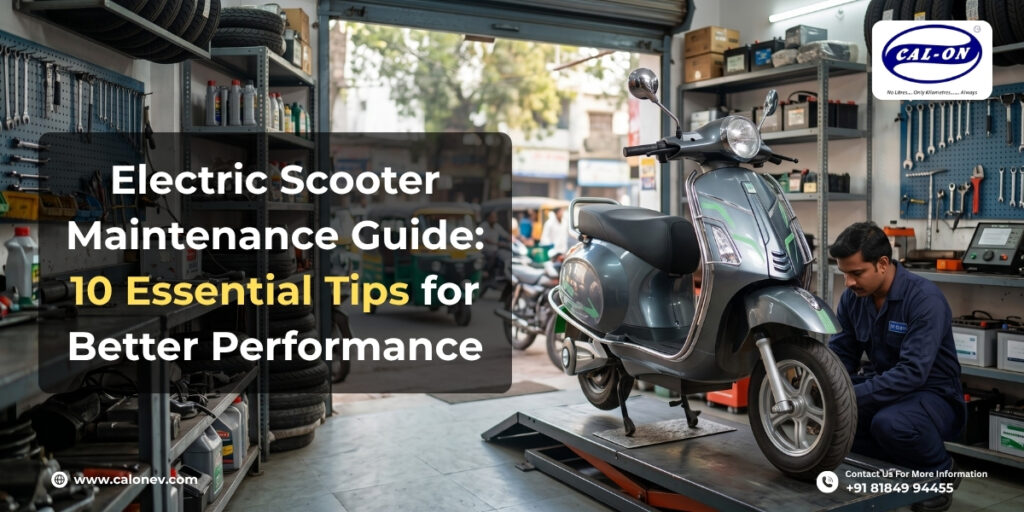
An electric scooter makes every day travel easier, whether you’re commuting to work, running errands, or handling local deliveries. But like any vehicle, it needs regular care to stay reliable, comfortable, and efficient.
The good news is that electric scooters generally have fewer moving parts than petrol-powered scooters. You don’t need engine oil changes or spark plug replacements, but tyres, brakes, batteries, electrical connections, and other components still need attention.
Following an electric scooter maintenance guide can help you identify small problems early, avoid unnecessary repair bills, and get the best performance from your vehicle.
In this article, we’ll cover 10 practical maintenance tips that every electric scooter owner can follow, including battery care, cleaning, servicing, and everyday safety checks.
Why an Electric Scooter Maintenance Guide Matters
Regular maintenance is about more than keeping your scooter looking good. It helps you recognise wear and tear before it affects your daily travel.
Following an electric scooter maintenance guide can help you:
- Maintain reliable everyday performance.
- Identify tyre and brake problems early.
- Protect the battery through sensible charging habits.
- Reduce avoidable repair expenses.
- Improve riding comfort and safety.
Although electric scooters require less engine-related maintenance, ignoring basic checks can still lead to expensive repairs. A few minutes of attention each week can make ownership easier in the long run.
1. Take Care of the Battery
The battery is one of the most important and valuable parts of an electric scooter. Its condition affects range, charging behaviour, and overall usability.
Good electric scooter battery maintenance starts with following the manufacturer’s charging recommendations. Use the supplied or approved charger, avoid unsuitable temperatures, and inspect charging cables for visible damage.
Here are a few habits worth following:
- Charge the battery according to the owner’s manual.
- Keep the charging port clean and dry.
- Avoid using damaged chargers or cables.
- Follow the recommended storage instructions if the scooter will remain unused.
- Get unusual heating, warning lights, or charging problems checked by a qualified technician.
Don’t assume every battery needs the same charging routine. Different models and battery chemistries may have different requirements.
2. Follow a Regular Servicing Schedule
Even if your scooter appears to be working perfectly, periodic inspections are important. A technician can check components that may not be easy to assess at home, including electrical connections, suspension, brakes, and other mechanical parts.
Regular electric scooter servicing helps identify wear before it becomes a bigger issue. Follow the service intervals specified by the manufacturer rather than waiting for a problem to develop.
During a service visit, ask the technician to explain any recommended repairs and provide an estimate before replacing parts. Keep service invoices and warranty documents in a safe place.
An organised maintenance record also helps you track recurring problems and understand how much you spend on keeping your scooter in good condition.
3. Check Tyre Pressure and Condition
Tyres affect handling, braking, comfort, and energy efficiency. Incorrect tyre pressure can make the scooter harder to control and may contribute to uneven wear.
Good electric scooter tire maintenance starts with checking tyre pressure against the values recommended by the manufacturer. Inspect the tyres for cuts, punctures, embedded objects, and worn tread.
Make this a simple habit:
- Check tyre pressure regularly.
- Inspect tyres before longer journeys.
- Look for uneven wear or visible damage.
- Replace damaged or excessively worn tyres promptly.
Avoid relying on appearance alone. A tyre can look fine while still having incorrect pressure. If you’re unsure about the right pressure, check the owner’s manual or ask an authorised service centre.
4. Keep the Scooter Clean
Dust, mud, and road grime can accumulate around the bodywork, wheels, and accessible components. Regular cleaning keeps your scooter looking presentable and makes it easier to spot damage.
These electric scooter cleaning tips can help you clean safely:
- Use a soft cloth and suitable cleaning products.
- Switch off the scooter before cleaning.
- Avoid directing high-pressure water at electrical components, connectors, or charging ports.
- Do not immerse the scooter or battery.
- Dry accessible surfaces before storing or charging the vehicle.
Always follow the cleaning instructions supplied with your model. Electric scooters are designed to handle certain conditions, but that does not mean every component is waterproof.
Cleaning also gives you an opportunity to notice loose parts, scratches, damaged cables, or other changes that may need attention.
5. Inspect the Brakes Regularly
Brakes are essential for safe riding, particularly in busy traffic. Over time, braking components can wear down, and performance may change depending on riding conditions and usage.
Electric scooter brake maintenance involves checking for unusual noises, reduced braking response, excessive lever travel, or other changes in how the scooter stops.
If you notice any of these warning signs, have the braking system inspected promptly. Do not continue riding if the brakes feel unsafe.
Avoid adjusting or replacing brake components unless you have the necessary skills and the manufacturer’s instructions support the work. A qualified technician can confirm whether the brakes need adjustment, repair, or replacement.
6. Look After Electrical Connections
Electric scooters rely on electrical components to operate correctly. Damaged wiring, loose connectors, or a faulty switch can affect performance and may create safety risks.
As part of your routine electric scooter maintenance tips, look for visible cable damage, loose external parts, or signs of moisture around accessible connections. Never open the battery pack or attempt to repair internal electrical components yourself.
If your scooter experiences repeated power interruptions, charging errors, warning indicators, or sudden changes in performance, contact an authorised service provider.
Use only compatible accessories and replacement parts. A component that appears to fit may not necessarily meet the vehicle’s electrical requirements.
7. Monitor Performance and Riding Behaviour
You know how your scooter normally feels on your daily route. That makes it easier to notice changes in acceleration, range, handling, or charging behaviour.
These electric scooter performance tips can help you maintain consistent operation:
- Accelerate smoothly instead of repeatedly using sudden bursts of power.
- Avoid carrying loads beyond the manufacturer’s limit.
- Follow the recommended tyre pressure.
- Use the riding mode appropriate for your conditions.
- Investigate unusual noises, vibrations, or warning lights.
A sudden reduction in range does not always mean the battery is failing. Weather, tyre pressure, road conditions, load, and riding style can also affect performance.
If the change is substantial or continues despite normal use, have the scooter checked by a qualified technician.
8. Follow a Simple Maintenance Checklist
It’s easy to forget small checks when you’re busy. A short routine makes maintenance easier to manage and helps you catch visible issues early.
Use this electric scooter maintenance checklist:
- Check tyre pressure and visible tyre damage.
- Test the brakes before setting off.
- Check the lights, indicators, and horn.
- Inspect the charging cable and connector.
- Look for loose parts or visible wiring damage.
- Pay attention to unusual sounds or warning lights.
- Keep the scooter clean and dry as recommended.
- Follow the scheduled service plan.
- Review battery and charging guidance in the owner’s manual.
You don’t need to carry out every check daily. Build a routine based on your usage, and ask a service professional about any issue you cannot safely assess yourself.
9. Understand and Budget for Maintenance Costs
While electric scooters can avoid several expenses associated with petrol engines, maintenance is not entirely free. Tyres, brakes, inspections, electrical repairs, and replacement parts can still add to the overall cost.
Your electric scooter maintenance cost will depend on the model, distance travelled, road conditions, warranty coverage, and local service rates.
To budget more accurately:
- Ask the dealer about scheduled servicing charges.
- Check whether complimentary services are included.
- Review battery and vehicle warranty terms.
- Ask about the cost and availability of common replacement parts.
- Keep a separate reserve for unexpected repairs.
Regular inspections can help you identify problems early, although they cannot prevent every failure. When comparing scooters, consider service support and long-term ownership costs alongside purchase price and advertised range.
10. Choose Reliable Service Support
Even careful owners sometimes need professional help. A reliable service network can make a big difference when your scooter needs inspection, diagnostics, or replacement parts.
Before purchasing, ask about authorised service centres, warranty conditions, recommended service intervals, and spare-part availability.
For riders exploring electric mobility options, CAL-ON EV is a brand to consider when researching electric two-wheelers and utility-focused EV solutions. As with any purchase, compare the specifications of the model you’re considering and confirm its maintenance requirements, service arrangements, and warranty details with the dealer.
Following an electric scooter maintenance guide is easier when you know where to go for qualified assistance. Keep the service contact details handy and address warning signs promptly instead of postponing necessary repairs.
Final Thoughts
Keeping your electric scooter in good condition doesn’t have to be complicated. Regular tyre checks, sensible battery care, clean charging connections, safe braking, and scheduled servicing can help you spot problems before they disrupt your routine.
The key is consistency. Small maintenance habits are easier to manage than unexpected repairs, and they can help you enjoy a more dependable riding experience.
Use this electric scooter maintenance guide as a starting point, but always follow the owner’s manual for model-specific instructions. With responsible care and reliable service support, you can make every day electric mobility more practical and enjoyable.
Also Read: Electric Vehicle Range: What Affects Battery Performance and Distance per Charge? – CAL-ON EV
Frequently Asked Questions
1. How often should I service my electric scooter?
A: Follow the service intervals recommended by the manufacturer. Your scooter may need earlier attention if you ride long distances, carry heavy loads, or notice unusual performance changes.
2. What is the most important part of electric scooter maintenance?
A: Battery care, tyre condition, brake performance, and scheduled inspections are all important. The right priorities depend on your model and riding conditions.
3. Can I wash my electric scooter with water?
A: Follow the manufacturer’s cleaning instructions. Use a suitable cloth and avoid directing high-pressure water at electrical components, the battery, or charging connections.
4. How can I reduce electric scooter maintenance costs?
A: Follow the recommended service schedule, maintain correct tyre pressure, use compatible charging equipment, and address minor issues promptly. Ask your dealer about warranty coverage and common spare-part prices.
5. What should I do if my electric scooter suddenly loses range?
A: Check basic factors such as tyre pressure, load, weather, and riding conditions. If the range drops significantly or warning lights appear, arrange an inspection with an authorised service centre.