
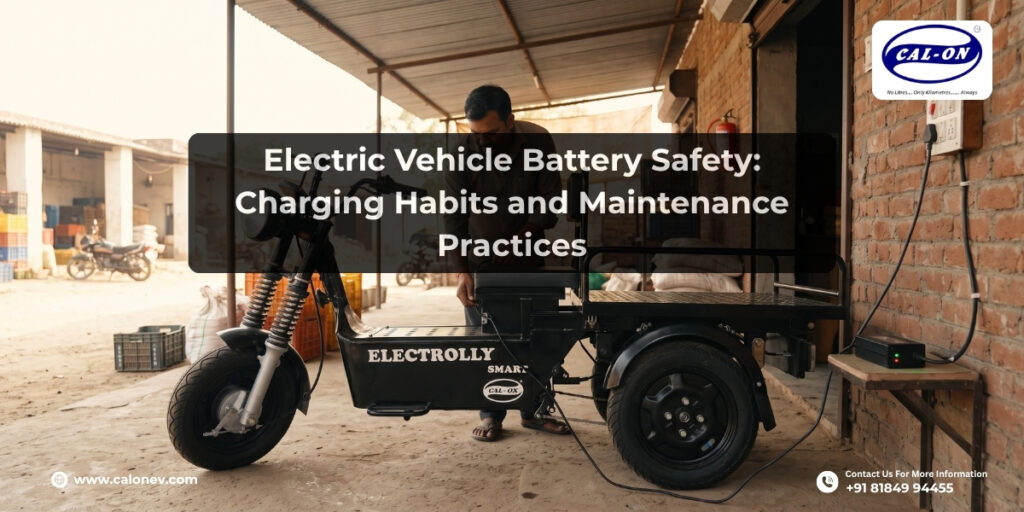
Electric vehicles are becoming a practical choice for daily commuting, business deliveries, and everyday travel. As more people switch to electric scooters and two-wheelers, understanding how to charge and maintain their batteries has become increasingly important.
A battery is one of the most valuable components of an electric vehicle. Good charging habits and regular inspections can help maintain its performance, reduce avoidable wear, and support safer everyday use. On the other hand, damaged charging equipment, improper handling, and ignoring warning signs can create unnecessary risks.
That is why electric vehicle battery safety should be part of every owner’s routine. You do not need to be a technical expert to care for your battery. A few simple habits, combined with the manufacturer’s instructions, can make a real difference.
Let’s explore the practical steps every EV owner should know.
Why Electric Vehicle Battery Safety Matters
Electric vehicle batteries are designed to operate within specific temperature, voltage, and charging limits. Following the manufacturer’s guidance helps keep the battery within those limits and reduces the chances of damage.
Battery safety is not only about preventing serious incidents. It also involves recognising early warning signs, using compatible equipment, and avoiding habits that may affect battery performance over time.
Here are some useful EV battery safety tips to follow:
- Use the charger recommended or approved by the vehicle manufacturer.
- Inspect charging cables and connectors before use.
- Keep the charging area dry, clean, and well ventilated.
- Avoid charging a battery that appears damaged or unusually swollen.
- Pay attention to warning lights, unusual smells, smoke, or excessive heat.
- Follow the vehicle manual for charging, storage, and temperature limits.
If you notice smoke, hissing, unusual swelling, or rapidly increasing heat, stop using the vehicle if it is safe to do so, keep people away, and contact emergency services when there is a fire or immediate danger. Never handle a smoking or overheating battery yourself.
Electric vehicle battery safety starts with safe charging
Charging is a regular part of EV ownership, so it is worth developing a consistent routine. A safe charging setup protects the vehicle and helps you avoid preventable problems at home or at work.
Choose the right charger
Always use a compatible charger supplied with the vehicle or specifically approved by its manufacturer. A charger that does not meet the required specifications can damage the battery or create electrical hazards.
Do not modify connectors, bypass protective features, or use damaged charging equipment. If a plug becomes unusually hot, a connector appears discoloured, or charging repeatedly stops unexpectedly, discontinue use and have the equipment inspected.
Choose a suitable charging location
Charge your vehicle in a dry, ventilated area that follows the manufacturer’s requirements. Keep the charger away from standing water, combustible materials, and anything that could block ventilation.
Avoid extension cords or adapters unless the manufacturer and a qualified electrician confirm that the setup is suitable. The electrical outlet and circuit should be appropriate for the charger’s power requirements.
These safe EV charging practices are especially important when charging overnight or in shared parking areas.
Follow the recommended charging routine
Different battery chemistries and vehicle models have different charging requirements. Follow the instructions for your specific vehicle instead of assuming every battery should be charged in the same way.
Some manufacturers recommend particular charging limits or routines for everyday use. Others may provide guidance for long-term storage. Do not leave charging unattended if your owner’s manual advises against it, and never ignore a charger or vehicle warning.
Practising EV battery charging safety means treating charging as a planned activity, not simply plugging in and forgetting about it.
Electric vehicle battery safety Through Regular Maintenance
A well-maintained battery is easier to monitor, and early attention to problems can prevent further damage. Regular maintenance does not mean opening the battery pack or attempting electrical repairs yourself. Most owners should leave internal battery inspections and repairs to trained technicians.
Good electric vehicle battery maintenance begins with simple observations. Check the charging cable, connector, visible wiring, and charging port for signs of damage. Keep the port clean and dry according to the manufacturer’s instructions, and avoid spraying water directly into electrical connections.
You should also:
- Follow the service intervals in the owner’s manual.
- Keep service records and battery-related warranty documents.
- Get repeated charging interruptions checked.
- Ask an authorised technician to investigate unusual range loss.
- Use approved replacement components when repairs are needed.
Pay attention to battery temperature
Batteries can become warm during charging or riding, but excessive or unusual heat should never be ignored. High temperatures can affect battery performance and may indicate a fault.
For electric vehicle battery overheating prevention, avoid charging immediately after unusually demanding use if the manufacturer advises allowing the battery to cool. Keep the vehicle away from direct heat sources and do not cover charging equipment in a way that restricts airflow.
If the battery becomes abnormally hot, emits an unusual smell, swells, or produces smoke, stop using it and follow the manufacturer’s emergency guidance. Do not attempt to cool a damaged battery with water or open the battery enclosure.
Everyday Habits for Electric Scooter Battery Safety
Electric scooter owners often use their vehicles for short commutes, errands, and delivery work. Because charging can become part of a daily routine, small habits are particularly valuable.
Practising electric scooter battery safety starts before you connect the charger. Check that the charging area is dry, the cable is undamaged, and the connector fits properly. Never force a plug into a port or continue using equipment that appears faulty.
After charging, disconnect the equipment according to the manufacturer’s instructions. Store cables neatly without tight bends, crushing, or pulling on the connector.
Your riding habits matter, too. Repeatedly carrying loads beyond the vehicle’s rated capacity or riding in conditions outside its intended operating limits can place additional demands on the vehicle.
These electric scooter battery charging habits help make charging more consistent:
- Park in a suitable location before connecting the charger.
- Check the cable and connector for visible damage.
- Follow the charging instructions for your particular battery.
- Avoid exposing charging equipment to rain or standing water unless it is specifically rated for those conditions.
- Disconnect the charger as directed by the manufacturer.
- Report unusual charging behaviour instead of repeatedly trying to restart a faulty system.
How to Extend Battery Life Without Compromising Safety
Battery longevity depends on several factors, including battery chemistry, temperature, charging patterns, usage, and storage conditions. No single charging trick guarantees a longer lifespan, so it is best to follow guidance specific to your model.
The following EV battery maintenance tips can help you build a sensible routine:
Avoid extreme temperatures: Park and charge in locations that comply with the manufacturer’s temperature recommendations.
Use compatible equipment: The correct charger helps ensure the battery receives the charging conditions it was designed for.
Follow storage guidance: If you will not use the vehicle for an extended period, check the recommended storage charge level and inspection schedule.
Respond to warning signs: Unusual heat, visible damage, or repeated charging errors deserve professional attention.
Keep up with servicing: Qualified technicians can inspect relevant electrical systems and identify issues that may not be visible during everyday checks.
If your goal is to understand how to extend EV battery life, consistency is more useful than experimenting with unverified charging advice. Avoid deliberately draining the battery completely or keeping it at full charge for extended periods unless the manufacturer recommends that approach for your model or circumstances.
Mistakes EV Owners Should Avoid
Even responsible owners can develop habits that seem convenient but may not be appropriate for their vehicle. Avoid these common mistakes:
- Using a charger simply because its connector fits.
- Ignoring damaged cables or loose charging connections.
- Charging in a wet or unsuitable location.
- Attempting to repair the battery pack without proper training.
- Ignoring warning indicators or unusual smells.
- Following generic battery advice that conflicts with the owner’s manual.
Remember that electric vehicle battery care is about protecting both the battery and the people around it. When in doubt, stop using questionable equipment and ask the manufacturer or an authorised service centre for guidance.
Do not try to diagnose a high-voltage fault yourself. Even when an EV appears switched off, some electrical components may still present a hazard.
A Simple Battery Care Routine for Every EV Owner
You can make battery care manageable by splitting it into three routines.
Before charging: Inspect the charger, cable, connector, and charging area. Do not charge if you notice damage or suspect a fault.
During regular use: Watch for unusual heat, unexpected range changes, warning lights, or charging interruptions. Follow the vehicle’s operating and load limits.
During scheduled maintenance: Ask a qualified technician to check relevant electrical components, review battery-related warnings, and confirm that your vehicle is following the recommended service schedule.
This approach keeps EV battery safety tips practical and easy to remember without turning battery care into a complicated task.
At CAL-ON EV, responsible electric mobility begins with informed ownership. Understanding charging requirements, following maintenance recommendations, and seeking qualified support when needed can help riders make better decisions throughout their EV ownership journey.
Final Thoughts
Safe battery ownership is not about being afraid of your electric vehicle. It is about understanding how the battery should be charged, recognising when something is wrong, and following the guidance designed for your specific model.
By making inspections part of your routine, using compatible charging equipment, and seeking professional help when warning signs appear, you can support reliable performance and reduce avoidable risks.
For every EV owner, electric vehicle battery safety should be a daily habit rather than an afterthought. Small, sensible actions can make your electric mobility experience safer and more dependable.
Also Read: Electric Two Wheeler Service Cost: What Owners Should Include in Their Budget – CAL-ON EV
Frequently Asked Questions
1. Is it safe to charge an electric scooter overnight?
A: Follow the manufacturer’s instructions for your specific model. Use compatible charging equipment and a suitable charging location, and do not leave charging unattended if the manual advises against it.
2. What are the warning signs of an unsafe EV battery?
A: Warning signs can include unusual or rapidly increasing heat, swelling, smoke, unusual smells, visible damage, and repeated charging errors. Stop using the vehicle and seek professional or emergency assistance as appropriate.
3. Can I use any charger with my electric vehicle?
A: No. Use the charger supplied with the vehicle or one explicitly approved by the manufacturer. A compatible connector alone does not guarantee that a charger is electrically suitable.
4. How often should an EV battery be inspected?
A: Follow the service schedule in your owner’s manual. Arrange an inspection sooner if you notice unusual heat, damage, charging problems, warning indicators, or a significant unexplained change in range.
5. How can I help my electric vehicle battery last longer?
A: Follow the manufacturer’s charging and storage guidance, avoid unsuitable temperatures, use compatible equipment, and keep up with scheduled servicing. Avoid unverified battery-care methods that conflict with the vehicle manual.